TRAINING PROFESSIONAL COURSE “CONFINED SPACES”

Introduction: According to article 11, point 1, letter b) of law no. 10237/2010 the employer organizes appropriate training for employees, in this case for works in confined spaces. The course provides basic information on the requirements of the Albanian legal framework in the field of Safety and Health in the workplace and the European one for confined spaces, training for safe work in confined spaces that are the cause of a large number of fatalities as a result of suffocation, intoxication, falling from heights, electric shock, fire, etc. Confined spaces are work environments such as wells, sewers, tunnels, chimneys, pipes, canals, tanks, silos, and pits in general which are suspected to be polluted air (lack of oxygen or toxic substances).

To whom it is addressed: first of all to companies, self-employed workers, and employees destined to operate in environments suspected of pollution and confined spaces. It is also valid for Prevention and Protection Managers, Coordinators for safety on construction sites, Supervisors, Site Managers who carry out or supervise work in confined spaces or with suspected pollution.

Objective: To transmit to learners knowledge on issues of workplace safety in confined spaces or suspected pollution from a legislative and risk identification and assessment point of view, including preventive and protective measures of the technical nature (procedures, personal protective equipment, tools for control of pollutants, etc.).

Course Duration: 8 hours

Contents: Theoretical part: Albanian and European legislation for confined spaces, the definition of spaces and their characteristics, dangers, and identification of dangerous agents: asphyxiating, toxic, flammable, and explosive substances, etc.

Practical part: examples of confined spaces with the possible presence of flammable or explosive chemical agents and analysis of real accidents, planning of works in confined spaces, personal protective equipment, evacuation of the injured person within the confined space, etc.

Course development methodology: Lecture in the classroom, using multimedia tools and practical tests. The course will be conducted with interactive methodologies, to involve the trainees, to encourage their interest, to encourage discussion with practical cases from their experience.

Certificate: After successfully passing the written test, trainees will have a Certificate, according to the license issued by the QKL and approved by the relevant ministry (QKL License No. LN-8413-08-2014).

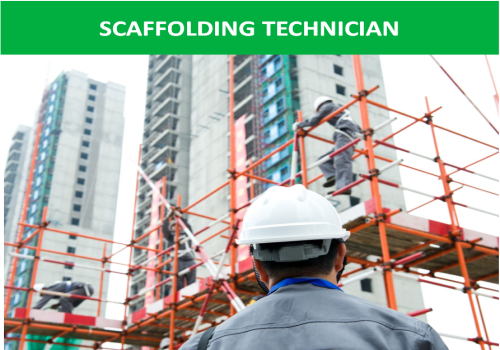
TRAINING PROFESSIONAL COURSE “WORK AT HEIGHT”

Introduction: According to article 11, point 1, letter b) of law 10237/2010, the employer organizes appropriate training for employees, in this case for work at height. The course provides basic information on the requirements of the Albanian legal framework and European standards in the field of Occupational Safety and Health, training on the use of protective equipment and equipment used for safety at work at height, scaffolding, stairs, lifting platforms, etc., for preventing, stopping and eliminating falls from heights.

To whom it is addressed: Toworkers, managers, and persons in charge of work involving the risk of falling from above (work at height). The course is also valid for Occupational Safety and Health Officers, Site Safety Coordinators, Site Managers, etc.

Objective: Training the staff who carries out or supervises work at height with particular regard to the safe use of personal protective equipment (harnesses, fall arrest devices, etc.), also regarding examples attributable to real risk situations.

Course Duration: 8 hours

Contents: Theoretical part – Legal framework on safety and health at work, the dynamics of the fall and preventive measures, risk identification, selection of control and protection systems, selection, use and correct conservation of PMI used for safety at work at height, etc.

Practical part: methods, techniques, and operating procedures – Analysis and collective comments on the practice performed, etc.The course is based on the best experiences of companies in the European Union in this field.

Course development methodology: Lecture in the classroom, using multimedia tools and practical tests. The course will be conducted with interactive methodologies, to involve the trainees, to encourage their interest, to encourage discussion with practical cases from their experience.

Certificate: After successfully passing the written test, trainees will have a Certificate, according to the license issued by the QKL and approved by the relevant ministry (QKL License No. LN-8413-08-2014).

TRAINING PROFESSIONAL COURSE ‘THE FIRST MEDICAL AID TEAM’

Introduction: Law nr. 10237/2010, Art. 8, point 1. letter ç) states that the Employer trains the persons who will carry out the evacuation and rescue and ensures, through trained persons, the realization of evacuation and rescue, firefighting, and providing first aid with the equipment necessary. The course provides the basic knowledge necessary for members of First Aid Teams on medical emergencies, theoretical and practical knowledge for the implementation of first aid procedures. The course is conducted by professional doctors in the field of first aid and occupational medicine.

To whom it is addressed: The course is aimed at members of the “First Aid Teams” and the staff that supports them within companies and public and private institutions, who according to Albanian legislation, must be trained and equipped with a certificate.

Objective: Creating competencies by transferring knowledge and skills to apply first aid procedures in case of injury or health problems.

Course Duration: 4-8 hours

Content: The course provides the basic knowledge needed for members of First Aid Teams on a medical emergency, theoretical and practical knowledge for the implementation of first aid procedures. The course is based on the best experiences of European Union companies in this field.

Course development methodology: The course will be developed based on audio-visual projections prepared to facilitate the best mastery of the lecture topics. To enable the achievement of the desired objectives, especially in terms of interaction with trainees, all trainees will be included in the practical test.

Certificate: After successfully passing the written test, trainees will have a Certificate, according to the license issued by the QKL and approved by the relevant ministry (QKL License No. LN-8413-08-2014).

Call Now